By Elias Dubus
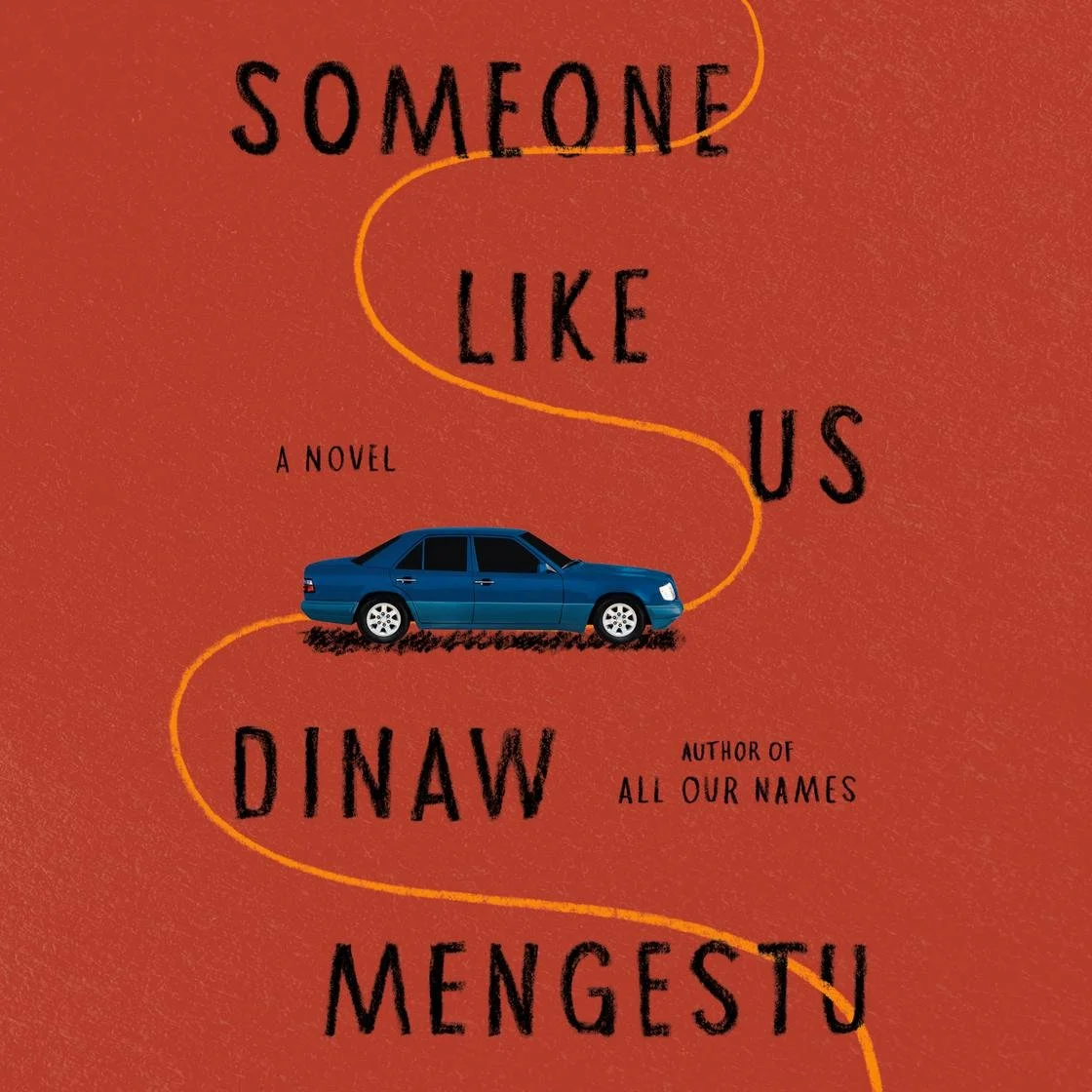
Dinaw Mengestu is the author of four novels, including his most recent work, Someone Like Us (Knopf, 2024). In addition to his fiction, Mengestu has reported on international issues in Darfur, northern Uganda, and eastern Congo. His work has appeared in publications such as Jane, Granta, Literary Hub, The New York Times, The New Yorker, and Rolling Stone. He is the recipient of multiple awards and honors, including a 2012 MacArthur Fellowship. Mengestu is a Professor of Humanities and the Director of the Written Arts Program at Bard College.
Mengestu was the 2025 Melanie Brown Lecturer at Chatham University. On October 28, I sat down with him before his craft talk and public reading later that night. We discussed the manipulation of genre, the fluidity of place, and his expansive new novel, Someone Like Us.
Editor’s Note: This interview took place just eight days before the 2024 U.S. Presidential Election and briefly delves into some of the issues that defined that campaign. With the midterm elections just around the corner, it seems an appropriate time for publication.
The Fourth River: In your new novel, Someone Like Us, the main characters feel a need to shape their lives into stories. Where did that need start for you?
Dinaw Mengestu: Pretty young. I wanted to create the same sensory, emotional experience that would come from a particular page in a novel or a short story. So, I’d say I didn’t necessarily start trying to write fiction, but I began a daily writing practice right around junior year of high school. I spent most of my time sitting in a coffee shop reading, smoking cigarettes, drinking coffee. And I had a notebook and a journal, and I never recorded what happened on a day-to-day basis, but rather, what did I see? And more importantly, what did I feel? All of that became my practice, probably long before I ever settled down and said I was going to start writing fiction. I think by the time I was a senior in high school, I began to write weird little one-to-two-page stories without ever thinking about structure or form. But by the time I got to college, I knew pretty clearly that I wanted to write.
TFR: Where were you at in terms of the stories before college?
DM: I think the only one that I remember—in part because I remember the reaction from my peers—was a story that was called “Happy One Minute, Dead the Next.” And it was about a character who inexplicably commits suicide. It came from absolutely nowhere. I just sat down, and I started writing it. But there was a kind of light tone. I think the driving idea was that it didn't make sense, and I didn't try to write a story to explain anything away. It was just: here's a guy who was happy one minute and then…
TFR: A little absurd.
DM: A little absurd. You know, probably like everything I write. There's probably some undercurrent of melancholy since I can't seem to escape it.
TFR: I don't know who can. I don't know if I've ever read a novel that doesn't have a little bit of melancholy.
DM: Yeah. That's like a hallmark card, I guess.
TFR: I actually wanted to get right into that darkest aspect of Someone Like Us, which is Samuel's suicide. It's structurally a mystery in a lot of the ways things unfold, but it's a much more personal discovery that the protagonist, Mamush, is making. What was the inspiration to pursue a novel within the genre of mystery?
DM: Initially, I wanted to play more on these tropes of mystery and detective noirs than I actually did, in part because it became more intimate. And the relationship between Mamush and Samuel became far more personal. They reflect, and they mirror each other in many ways, which I didn't necessarily know would be the case at the beginning. And then it became a kind of inquiry into a practice of writing and the journalistic techniques that narrators are aware of. And that's the point at which that trope falls away.
TFR: In terms of the structure, it's not quite a genre novel (and I have my problems with that term), but was there any newfound enjoyment in structuring that?
DM: I've never been interested in a linear narrative. From the very beginning, I always had this interest in the way stories move forward and backwards and the way we understand and experience time. It's been kind of circular rather than point A to B. This book doesn't necessarily do that; it does that in a certain way, the same way I think all of my other books do. But then, there are loops inside of each one of those things. That became really enjoyable. By the time, after many years, it began to solidify, it made certain things possible that I didn't know were possible for me. It felt kind of hallucinatory. Because at first, I was like, why are they doing this? This doesn't make sense structurally. How do I get out of this problem?
TFR: Is there a certain confidence that you build through the experience of writing? It’s your fourth novel and you've introduced this narrative in this new way. Is that something that gave you a different kind of satisfaction than before?
DM: Yeah, it did. It seemed like maybe something that no one would see or be able to fully understand. But once that thread was established, then it connected to the ethical challenge of telling Samuel's story and creating characters who were telling Samuel's story. Obviously, I'm always still the author. There's a theoretical autonomy that I was very happy for him to have, a kind of narrative voice that was slightly outside of my own control.
TFR: Do people ever mistake this for autofiction? It seems like a misconception that could easily happen, because of the specificity of place.
DM: Certainly, for this. The other [novels] were far enough away from my life. This one had very clear established links, like that he has a wife, Hannah, in Paris who's a photographer. It's my wife who made the photos for the book.
TFR: I was going to ask about that!
DM: It was something that I certainly wanted to lean into, in part because I was deriving a story that was based on somebody that was close to our family. It felt like if I was going to do that, then I needed to have some skin, some personal, intimate part of me inside of the text as well. It felt like that was the way to both feel tethered to the narrative, and to make sure it implicated me inside of the story in a way that I personally needed.
TFR: With Hannah and Mamush, there are always these moments where Hannah very simply knows what's happening with him. Even while his self-delusion, in addiction, is profound.
DM: Samuel is very aware, and he learns from the time he arrives in America, that there will be an ongoing set of disappointments. It becomes part of the performance that he then lives with. Between Mamush and Hannah, she can see it. Even if she can’t always name it, she understands something is wrong. When she makes a photo out of the tools of his addiction, she constructs something and says “look at this, because you can't see yourself. But maybe you can if I bring that to you.” We can't ever really know if we understand the complexity of somebody. And that's perhaps the greatest affirmation of their individuality and their humanity—by respecting the limits of how much we can know.
TFR: I thought the photos were cool simply on a craft level, too. They’re basically Hannah's dialogue.
DM: The first time I did it, I took photos that I knew my wife had made and I secretly put them in there just to see how they felt. And then once it began to grow, I realized it's a dialogue and there was an autonomy that I wanted Hannah to have. So, I asked my wife to actually make the images based on her readings of the text.
TFR: Wow!
DM: Without anything from me. I felt like there was a way to get another voice inside of the story that was out of my control.
TFR: Did it feel like a risk?
DM: No, it didn't actually. Certain things began to happen with the photographs, too. Early in the book, they talk about their son as a bird, and that he'll jump out of the window one day. And when Hannah sends him a photo of their son's bedroom, there's a bird inside of the window, which actually was just by chance. That text had been written five, six years before the photo was ever taken. My wife took that photo in Italy just purely by chance because a bird flew into the window of the house we were staying in.
TFR: Speaking of risks, in your first novel, there’s an extended passage flashing back to Ethiopia and the main character’s father's arrest and ultimate death. Otherwise, that's mostly a chronological story set in one neighborhood in D.C. But I want to ask about the decision to have that flashback and put it in center of the novel.
DM: It was one moment in that novel where something happened that I didn't imagine happening. He didn't know his father was dead. It’s a version of my father's brother's murder in Ethiopia, which nobody was witness to. As I was writing it, I realized how deeply connected it was to that. But again, no one saw that. So, we have no stories around it. I can still remember the day that I wrote it, and where I was when I wrote it, because it felt really emotional. But it also felt like I knew it was really a book at that point. It made a broad kind of clarity that I hadn't had. And it did happen pretty close to exactly halfway in the text.
TFR: When you wrote that scene and you knew you were going to go back to Ethiopia to tell the story, was there a moment of responsibility that you felt? Or satisfaction or maybe even fear?
DM: Yeah, certainly. Because I also did go back to Ethiopia shortly after I finished the book. But I hadn't when I wrote those scenes. I hadn't been to Ethiopia since I was three. That was the first time I went back as an adult. But nothing actually changed. I felt more secure when I wrote. You imagine the versions of the places that you need. And that’s where the real truth is.
TFR: Do you find use for these labels of “migrant” literature?
DM: No, I don't find use for them. I remember before I published my first book and sent it to an editor, a friend, he was very blunt. He was like, “Just to be honest, I don't think anyone's going to want to buy a book about a bunch of African immigrants.” And there’s a certain truth to that. This book is really conscious in wanting to think about all the challenges that immigrants face in the country, going into the courts and thinking about the legal and economic things. But I think when we create this framework, we end up making hierarchies. I go into a bookstore sometimes and I see my books in the African Literature section. More of the book happens in France than it does in Africa.
TFR: As we’re talking, we have an election coming up. The rhetoric they’re using now is more frightening than it’s ever been. Internally, how do you combat the terror and the anger that must come from these attacks on certain groups?
DM: Yeah, it’s not new. It's very familiar and what’s frustrating is that we haven't figured out how to how to combat that. Because if you actually look at the immigration numbers, they talk about the record numbers. From 1984 to 1985, you adjust for population and the growth in population numbers is the same. The funding levels that we provide to communities where there are migrants arriving has actually stayed pretty much the exact same as it did in 1985 without any adjustments for inflation. So, we actually spend enormously less. I mean, a percentage of like eighty or ninety percent less than we did in the 80s. The immigration crisis we have, it's us. You see the same thing happening around the world. But the idea of wanting to try to define what the country is along particular terms; I think that's at the heart of it all. It's really a group of people who want to say the country is this. And that's the real fundamental thing they want to say: this is ours. They don't really care whether you're from Haiti or from Venezuela. They want to make sure that they keep a kind of homogeneity about who has power and who has access and control over those levers and those resources. As long as that ideology is present, then they'll find other groups when they finish with the immigrants.
TFR: That was just a grim interlude that I felt we had to take. But these are world issues and The Fourth River is about nature and place and identity. On that topic, do you read reviews?
DM: Yes. I said I wouldn't, but I do.
TFR: I’m curious what feedback you get that truly means something to you or how much you just shrug off because you're afraid it's going to get in your head. And if there's anything else that just makes you want to scream.
DM: You know, nothing positive ever gets in your head. It just doesn't. I don't think I'm alone in that. It’s nice to know when somebody has found a connection to the text and that makes me feel like, okay, the book lives in the world with these people. And that's a very reaffirming thing to know, that somebody carries these characters with them. I do appreciate that deeply.
TFR: In Someone Like Us, we have Paris, Chicago, D.C., all these different cities. I want to ask about how places define the characters while they're within them. How do characters morph within the places they inhabit?
DM: The spaces matter significantly. The differences between how people move through the space matters. Like describing the routes that they would have to take on the bus in Chicago to get from one part of the city to the other. Even when they're in Paris, their apartment is in this immigrant, gentrifying community. There’s no one kind of argument for how the spaces matter, but they just matter enormously. They’re just so essential to what and how and who has autonomy inside of those spaces.
TFR: And how has time changed those places for you? Having done so much traveling and living in different places, are you able to frame the life you lived when you go back? Do you have any answers?
DM: [laughs] I used to normally go back and think about how things have changed so much. And now I realize I go back and actually stop looking for the things that have changed because I'm more involved with remembering who I was when I lived there. And that's the thing that gets called to mind. The cities change, but suddenly you become conscious of who that version of you was and how you felt and how you moved through that space.