This essay appears in print issue #21 of The Fourth River but is misattributed to the writer Catherine Gammon (whose fine work we have had the pleasure of publishing in the past). The Fourth River regrets this error and apologizes to both authors. We are happy to share Ms. Fisanick’s work here with proper attribution. —Sheila Squillante, EIC
By Christina Fisanick
“I’m out with lanterns, looking for myself.” - Emily Dickinson
“Cemetery open dawn ‘til dusk.”
I slow my car to read the sign. A dusty blue sky, scarred with burnt-orange streaks, flashes between the trees. The dashboard clock glows 8:34. I shrug and drive through the still-open wrought iron gates.
I had heard the caretaker's house burned last week. Its first-floor windows boarded, the front door sealed. He and his family had escaped unharmed. In their absence, I have the cemetery to myself, so to speak.
A quick Google search tells me, “Civil dusk occurs when the Sun is 6° below the horizon in the evening.” Nautical dusk is different, when the Sun reaches 12° below the horizon, and astronomical dusk at 18°. Learning these facts does not help, of course. Not to mention, I’ve left my sextant at home.
I held one in my hands once at a nautical history museum. A crescent of burnished brass, its arc etched with tiny black numbers. Two small mirrors caught the light, one whole, one half, set within the frame beside a narrow telescope. The object label explained: sextants measure the angle between a celestial object and the horizon.
In this moment, on the top of Mount Rose, which isn’t a mountain at all, but an Appalachian foothill in the middle of my hometown, the sun is visible to my left, and the moon already up on my right. I stand between two celestial bodies. I remember from tenth grade astronomy that it’s called syzygy when the full moon rises as the sun sets. In college, I would encounter that word again in the writings of Carl Jung. Syzygy. A union of opposites: anima and animus. And yet here in this graveyard my Selves feel more undone than united.
I drive slowly up the narrow gravel drive, just wide enough for one car, and onto an even narrower gravel path onto which my Forester can barely turn. I look up at the sun, again, a fiery ball sinking ever lower behind the hills that glow deep green despite the August heat.
I stop the car and take out my imaginary sextant. Ten degrees of separation, I decide. Four more to go before the police show up to kick me out.
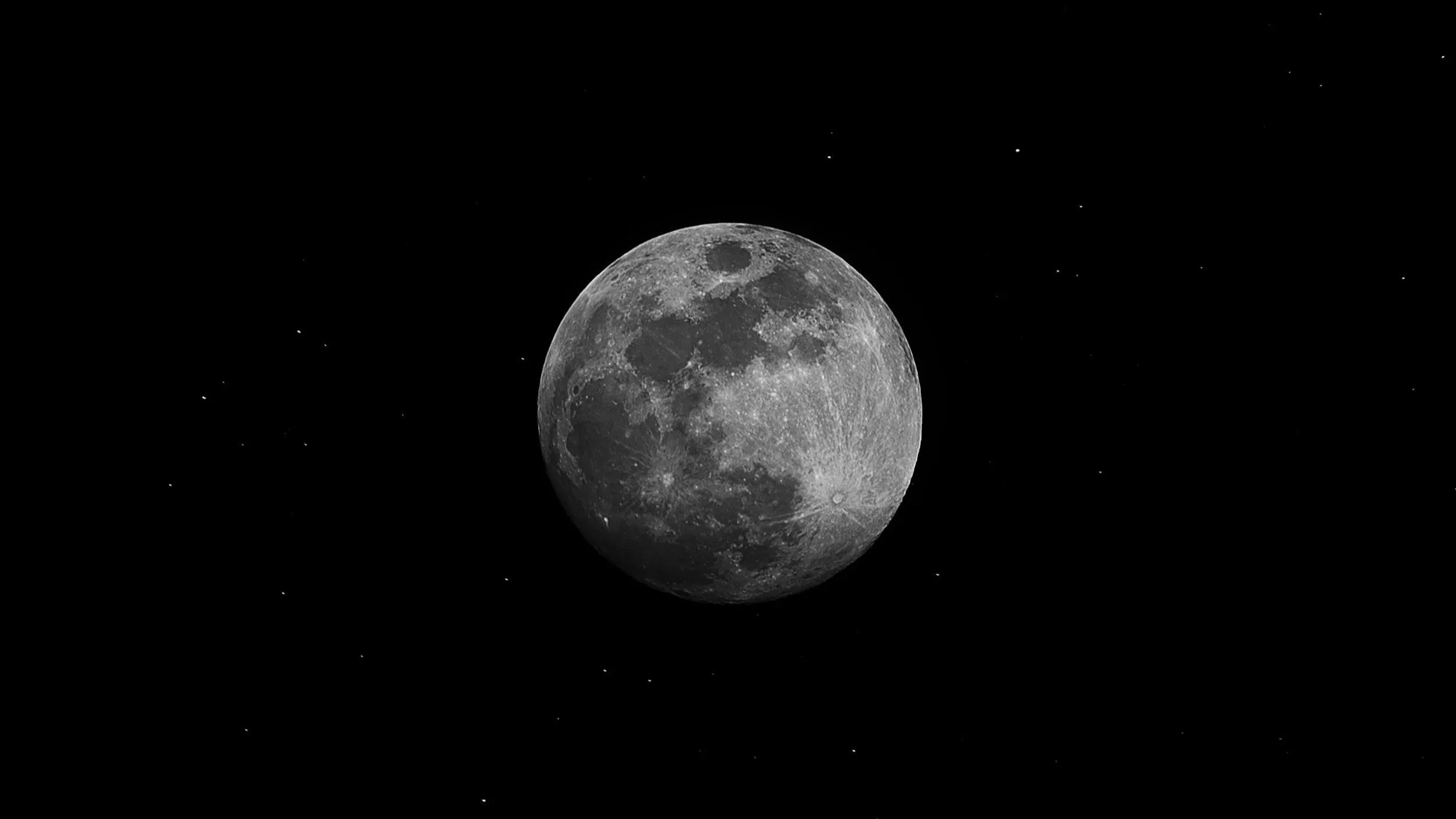
I turn down another gravel path and spot the moon, a flat white disk floating in the eastern sky. I stop the car again. This time to take a picture, knowing damn good and well I can’t ever take a decent photo of the moon. I slip back behind the driver’s seat and resume searching the rows for familiar last names: Gould, Burgy, Wiedabusch.
It is so hard to find her grave. Every time I try, I get lost amongst the headstones, stepping on someone else’s dead. This time, I am determined to find her on my own instead of calling my dad for help. He knows the spot. They have been burying his family here for generations. After walking in circles and tripping over tree roots, grief overcomes me. I feel like I have failed her again. Like I’m stuck in an ancient riddle. How can a mother lose her daughter when her daughter is already lost?
Samantha shares a grave with my pap. I had just turned eighteen a few weeks before her father murdered her. I had no money. It was decided that it would be cheaper to re-open Pap’s grave than to buy a plot solely for her. She was just twenty-four inches long.
I was Pap’s girl. Everybody knew it, especially me. I lived with my grandparents for the better part of my first seven years. To this day, people say that he thought the sun rose and set with me.
Pap’s favorite coffee cup was my favorite, too. On one side, a drawing of a bowlegged cowboy with his gun pointed at a bull’s-eye under the words: “Pistol Club. Members Only.” On the back, a pistol and “Drink Til Midnight. Pistol Dawn.” I kept that mug in one or another of my kitchen cabinets up until I lost everything in a house fire when I was thirty-four. Fires, they seem to follow me.
I park and wander through the headstones, knowing that Samantha and Pap and other family members are buried in this old part of Mount Rose, whose graves date back to 1799.
I stop and visit with Davis Grubb. Hometown legend. Author of Night of the Hunter and Fool’ s Parade. I thank him for his beautifully awful words and apologize for not learning until only recently that he had grown up just down the street from me. His Appalachian noir had filled my head with lurid possibilities and confirmation that the world is both dark and light.
It’s twilight now, I think. It’s that time of day when humans struggle to see clearly. I can barely make out the names on headstones just a few feet away. I’m running out of light, and I still haven’t found Samantha.
Most of my generation has given up the tradition of cemetery visits. Though some of us still buy blankets of artificial flowers to grace the graves of those we’ve lost. But most of us see this practice as empty, and the cost of caskets and graveyard burial wasteful. The money. The land. All those wasted resources. Cremation seems more defendable. Preferring cremation and body composting to a wooden box with brass handles.
Samantha’s coffin was small enough to be carried by the undertaker. I recall watching him maneuver the white box through the trees, surefooted and easy. Steps he’d no doubt takenbefore. I close my eyes and try to remember more. The big tree under which she is buried. Was the tree a pine? An oak? A maple? Remember, I plead with myself. Remember.
But I have spent thirty-four years trying to forget.
I don’t come here often. But today is two days before her birthday, and I was already in town giving a reading at my childhood library. I look up from these rows of stones at the darkening sky and wish for a candle to light my way, to celebrate her short life.
I turn on my iPhone’s flashlight and scan the nearest markers. It’s full dark now and I start to panic. Do I give up and head back to the car, or keep searching? I’ve got to be close.
I start calling for Pap. The only person in my life who ever made me feel safe. Reaching for him in the ether, tears come. I aim my phone at the nearest headstone, whose time-worn name can no longer be read. I realize I’ve gone too far into the old section. I’m encircled by Civil War and Revolutionary War dead. Thinned limestone markers long sunk into the ground, some with less than a foot of their tablets visible. Crooked teeth in a sunken jowl.
I shine my light in a sweeping arc, growing desperate. No one knows I’m here. I have no idea if or when the caretaker will return. My car, no longer visible. What if I trip over a branch and hit my head on a gravestone?
After wiping away tears with the tail of my shirt, I look up, expecting moonlight, and find only tree cover. I walk slowly between the markers, nearing my car just as my phone battery dies. Collapsing into the front seat, the weight of it all hits me. I’ve failed her again. I’ve never done anything other than fail her, I think.
Finally, I start my car. In my headlight beams, the marble and granite headstones seem to glow. I gingerly maneuver my Subaru down the narrow pathways and out of the cemetery. I roll to a stop at the gate and whisper into my rearview mirror, “I’m sorry, Samantha,” and leave her there again in the dark amongst the dead.
Christina Fisanick is the author or editor of more than thirty books, including The Optimistic Food Addict. Her shorter works have appeared in Belt, Still, and Women of Appalachia. She is president of the Writers Association of Northern Appalachia, the co-editor of the Journal of Appalachian Studies, and teaches English at PennWest University.